what is the priority action by the scrub nurse when the surgeon begins to close the surgical wound?
Chapter 2: Table of Contents
- two.ane Setting up for surgery
- 2.2 Soaps and Antiseptics used for surgeon and patient preparation
- ii.3 Patient Grooming
- Patient Positioning
- Emptying the Bladder
- Clipping
- Skin Training
- Video: Patient Training
- Patient Transfer/Opening Surgical Packs
- Video: Last Skin Preparation
- Patient Positioning
- ii.4 Draping
- 2.5 Limb Preparation
- two.half dozen Limb Draping for Surgery
- two.seven Surgeon Training
- 2.8 Surgical Preparation Quiz
- 2.9 Asepsis Quiz
Peel Preparation
The goal of patient skin preparation is to reduce the transient bacterial flora on the skin surrounding the surgical incision site to decrease the adventure of incisional infection.
Typical peel preparation includes a five minute soap scrub followed past the application of booze and finally an booze based disinfectant such as chlorhexidine.
When disinfecting a wound or a surgical site that is close to, or includes mucous membranes, booze is not used and the disinfectant used is typically water (aqueous) based instead.
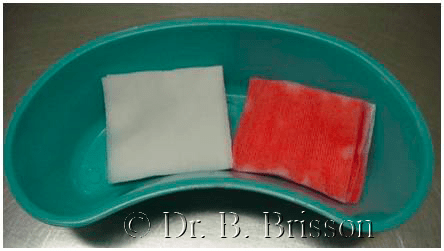
In a kidney dish, place ii chlorhexidine soaked scrub brushes in warm tap water. In some other, identify two piles of gauze sponges and thoroughly soak each one with isopropyl booze and with a chlorhexidine based tincture respectively in preparation for patient preparation.
Step 1: Lather Scrub
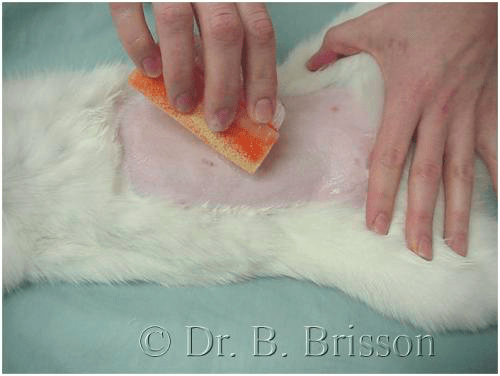
The peel is prepared to mechanically remove oil and debris and to reduce the transient bacterial flora on the skin surrounding the proposed surgical incision site. A disinfectant soap is used in the outset footstep of skin preparation. Normally used soaps for preparing surgical patients incorporate chlorhexidine or povidone-iodophors every bit the main antibacterial agent.
Afterwards removing or replacing the labcoat worn during clipping and vacuuming, an initial soap scrub is performed. At the OVC, two sequent soap scrubs (using ii split up scrub brushes soaked with tap h2o), are performed while doning non sterile examination gloves (total of v minutes contact time).Use simply the sponge side of the castor.
A get-go brush is used to create a soap and remove superficial dirt and debris. Prior to discarding it, the first brush is also oft used to moisture and comb (this time using the bristle side of the brush) the hair next to the field so it is oriented away from the surgical site. This first lather scrub is removed using newspaper towels or gauze. While still doning exam gloves, a second water and chlorhexidine soaked scrub brush is used to perform the second lather scrub. It is of import to create a proficient lather (suds) over the entire field to allow skillful contact between the clarified lather and the skin. As long equally the soap is in contact with the peel, you do not need to physically scrub the skin for the entire fourth dimension period if the peel is articulate of debris as this may abrade the skin excessively. A hat and mask is often worn during this portion of the prep. In individual exercise, gauze sponges soaked with disinfectant soap and tap water (instead of scrub brushes) are commonly used to perform the lather scrub.
Step ii:Wipe Suds
Afterward the lather scrub is complete (5 minutes of suds contact fourth dimension), the suds are removed using a clean paper towel or a gauze sponge in order to perform the next steps of pare preparation.
Then, depending on the solution used to perform the soap scrub, perform the circumferential preparation using alcohol and tincture of chlorhexidine swabs (or alcohol and tincture of iodine swabs if that is what your practise uses).
Skin grooming mostly begins at the center of the shaved area (at the proposed incision site), and continues using a concentric circular pattern until the edges of the shaved area are contacted. Remember never to return towards the incision site with used gauze; once pilus is touched, the gauze or cotton fiber is discarded and a new one is used. This action is repeated over the entire field a minimum ofthree timesfor each solution. Cover the surgical field with a sterile curtain or towel to prevent contamination of the prepared surgical field during transfer to the surgical suite.

Ii types of training patterns:
1)Concentric Preparation: Skin preparation generally begins at the center of the shaved area, (at the proposed incision site), and continues using a concentric round design until the edges of the shaved area are contacted. Call up never to return towards the incision site with a used gauze. Once hair is touched, the gauze or cotton is discarded and a new gauze is used. This action is repeated over the entire field a minimum of three times.
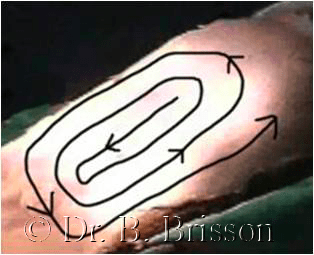
two)Horizontal Preparation: Skin preparation generally begins at the eye of the shaved area, (at the proposed incision site), and continues using a horizontal pattern on either side of the shaved area. I must recollect to never render towards the incision site with a used gauze. If pilus is touched (at the superlative or the sides of the incision), the gauze or cotton is discarded and a new gauze is used. This action is repeated over the entire field a minimum of three times.
Footstep three: Alcohol
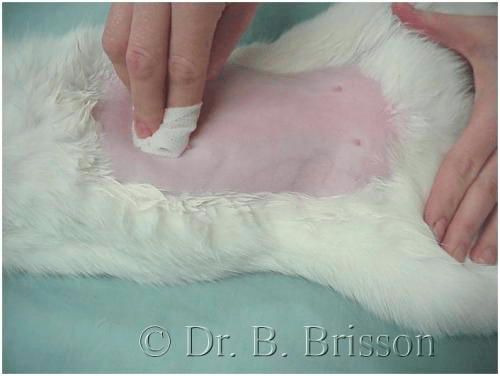
The second step of skin training involves removing the lather formed during scrubbing by wiping with isopropyl alcohol soaked gauze swabs or cotton wool balls. Alcohol disinfects and helps to dissolve oils from the peel.
Step iv: Disinfectant
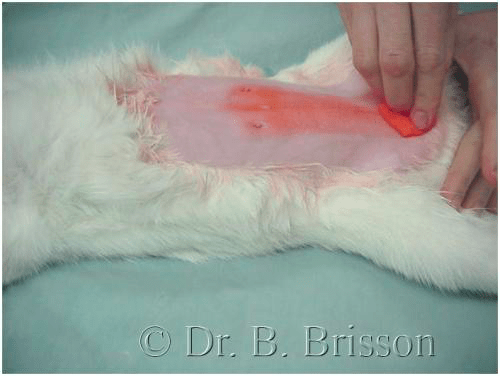
Disinfectants are and then applied to the surgical site to permit further bacterial killing to occur. These products ordinarily incorporate the same active agents equally the soaps used for the surgical scrub (due east.g. chlorhexidine), just are more concentrated and normally contain booze equally a base. The disinfectant is painted on the skin with a cotton fiber brawl, gauze swab or may be sprayed on. Some disinfectants such every bit iodophors require a longer contact fourth dimension (ii minutes) to be effective. Aqueous (non alcohol based) solutions are used to prepare wounds or surgical sites that are close to, or include mucous membranes.
Sterile Draping:
Prior to transporting the patient to the surgical suite, the prepared surgical site is covered using a sterile drape or towel to prevent inadvertent contamination during transportation.
Remember: Surgically prepared skin is very clean simply is never sterile.
Last Peel Preparation (Performed After Scrubbing, Gowning and Gloving)
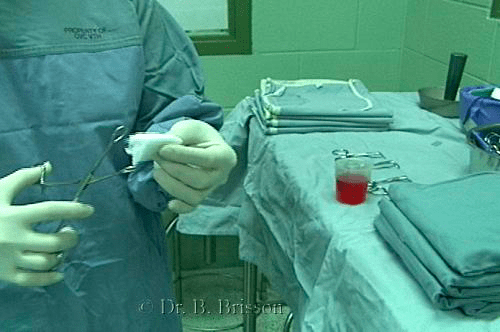
Following initial pare grooming and transport to the surgical suite, the gowned (and gloved) surgeon performs terminal skin grooming prior to applying the surgical drapes. A sterile gauze sponge is grasped using sterile sponge forceps. The sponge is and then dipped in an antiseptic solution (iodine or chlorhexidine based tincture depending on the solution used for skin preparation) and the site is prepared using a concentric pattern as previously described. The surgeon should be conscientious not to contaminate the sterile surgical gown (or gloves) on the surgical tabular array, patient (especially hair) or anesthesia equipment during final grooming. Once final preparation is complete, the gauze and sponge forceps are discarded without handling or passing over the surgical table (come from behind) since they are no longer considered sterile.
< Clipping Video: Patient Preparation >
Source: https://www.vetsurgeryonline.com/skin-preparation/
0 Response to "what is the priority action by the scrub nurse when the surgeon begins to close the surgical wound?"
Post a Comment