What Would You Use to See What Network Adapters Are Installed in Your Windows Computer
Windows ten is the latest and greatest version of the Windows Operating System, simply it is far, far from perfection. Among the many issues that Windows 10 users from all over the globe have faced is their networks adapters and their drivers not working in Windows 10. Some of the Windows 10 users affected past this outcome but don't meet their network adapters being listed in Device Director, some of these users' computers fail to recognize their network adapters, and, in some cases, the network adapters don't piece of work even though they are recognized and are listed in Device Manager.
Keep in mind that to perform some steps in the solutions below, y'all will demand Internet connectivity, so, y'all may use a USB adapter, ethernet cablevision, Wi-Fi connection, or Bluetooth connexion (east.g., use mobile's net through Bluetooth) to perform those steps.
Ability Off Your Device and Unplug its Ability Cable
A temporary glitch in the power options of your device (like the network adapter is put to "deep sleep" by the OS) may cause the network adapter not detected in Windows ten. In this case, powering off your device and unplugging its power cable may solve the trouble.
- Shut downwardly your PC and unplug its ability cable. In the case of a laptop, remove its battery.
- Now hold the ability push for a minute and so get out the system unplugged for 30 minutes.
- So connect back the power cable to your system (in case of a laptop, put back its battery) and ability on the organisation to check if it is clear of the network adapter consequence.
If the issue persists and yous are using a laptop, y'all may battery drain the laptop and subsequently, check if the outcome is resolved.
Use the Network Adapter Troubleshooter
Microsoft has bundled Windows ten with a bunch of troubleshooters to solve the common system bug and one such troubleshooter is the Network Adapter Troubleshooter. Earlier diving into the more technical solutions, it volition be a practiced idea to run the Network Troubleshooter to solve the event.
- Correct-click Windows and open Settings.
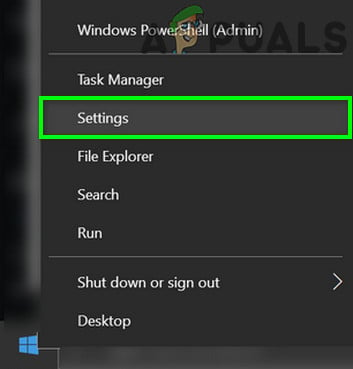
Open Windows Settings - Now select Update & Security and head to the Troubleshoot tab.

Open Update & Security - And then open Additional Troubleshooters (in the right pane) and aggrandize Network Adapter.
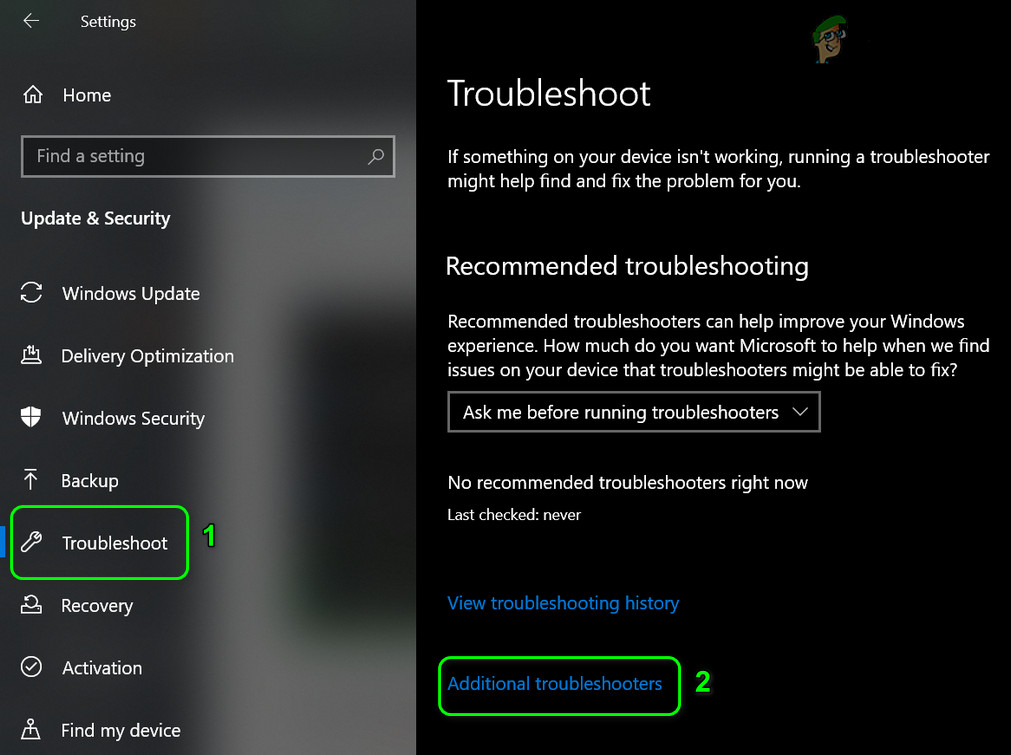
Open up Additional Troubleshooters - At present click on Run the Troubleshooter and employ the suggestions by the troubleshooter.
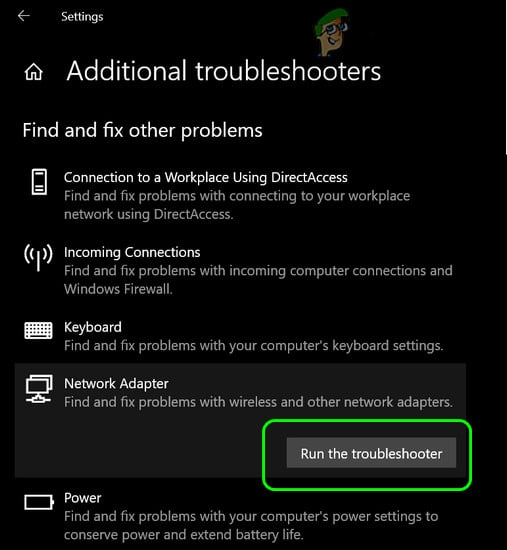
Run the Network Adapter Troubleshooter - Then cheque if the network adapter is detected in Windows 10.
Update the System Drivers to the Latest Build
Your network commuter might not exist shown in the Device Manager if the system drivers are outdated. In this case, updating the system drivers (especially, the chipset drivers) may solve the problem. Just before that, check if uninstalling the latest Windows update (if the consequence started afterwards a Windows update) solves the network adapter problem.
- Manually update the system drivers to the latest built. Exercise not forget to check the OEM website for the updated system drivers. If your OEM has an update utility (like Dell Support Assistant), use that utility to update the drivers.
- One time the arrangement drivers are updated, check if the network adapter effect is resolved.
If the result persists, you may try an older driver or roll back to an older driver of the network adapter to solve the consequence.
Edit Power Plan Settings
The network adapter might not be detected in Windows 10 if the power settings of your device are putting the adapter to "sleep". In this context, editing the power program settings of your organization may solve the network adapter problem.
- Right-click Windows and select Power Options.
- Now, in the correct pane, click on Additional Power Settings and open Modify Plan Settings.
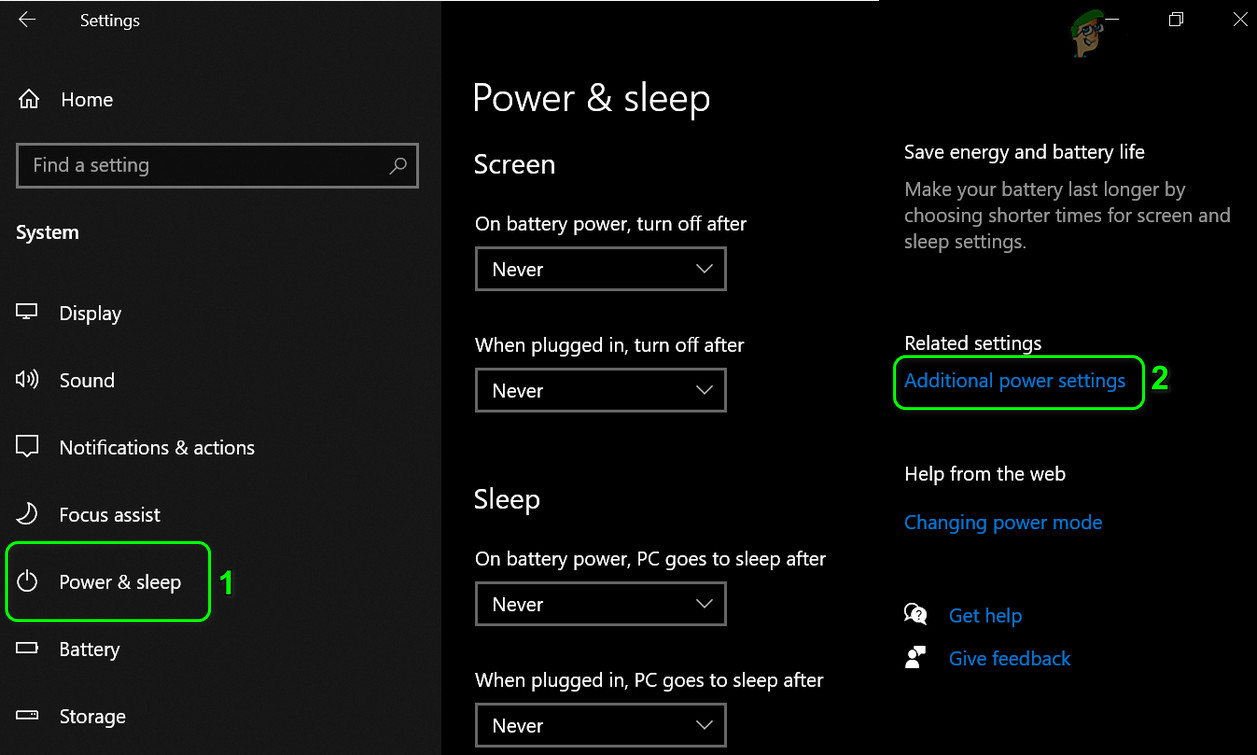
Open Additional Power Settings - And then click on Modify Advanced Power Settings and expand Wireless Adapter Settings.
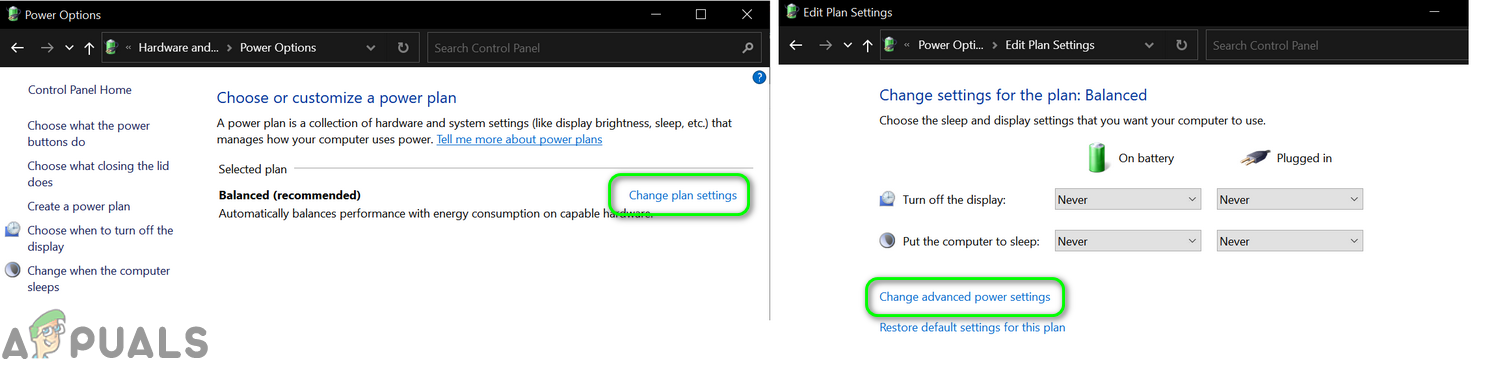
Change Avant-garde Power Settings - Now expand Power Saving Mode & ready On Battery and Plugged-in to Maximum Performance (if it is already fix to Maximum performance, see the lesser of this solution).
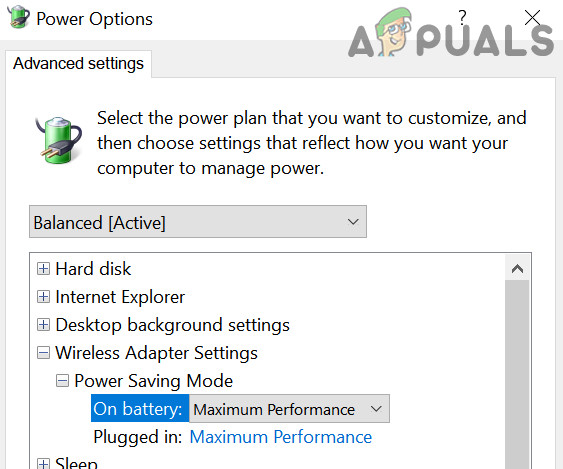
Set Ability Saving Mode in Power Options to Maximum Performance - Then apply your changes and unplug the power cable of your laptop.
- Now close down your system (not restart) and so ability on your system.
- So cheque if the network adapter effect is resolved. If and then, y'all may connect back the laptop's ability cable.
If at step 4 the On-Battery or Plugged-in options are already set to Maximum Operation, fix the options to Power Saving mode and shut down your PC. Then follow the above steps and check if it solves the network adapter issue.
Disable the Fast Startup Feature of Windows 10
Fast Startup helps your PC to boot up apace (every bit the name suggests) but as information technology restores the organisation from a mixed country between hibernation and close down, it may "overlook" an essential resource and thus cause the issue at mitt. In this scenario, disabling the Fast Startup characteristic of Windows 10 may solve the issue.
- Correct-click Windows and open Power Options.
- Now open Additional Power Settings and in the resulting window, click on Choose What the Ability Buttons Practise.

Open Choose What the Ability Buttons Exercise - Then click on Change Settings That Are Currently Unavailable and in the bottom section of the window, uncheck Plough on Fast Startup.
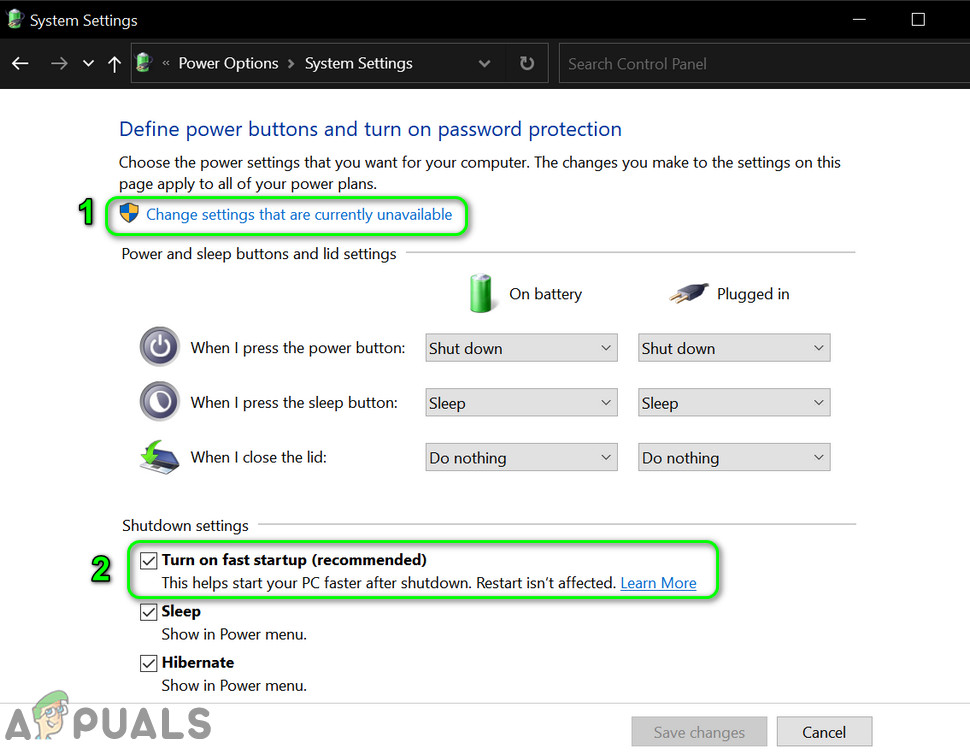
Disable Fast Startup - At present salve your changes and shut downwardly your PC (do non restart).
- Then ability on your PC and check if it is clear of the network adapter issue.
Evidence Subconscious Devices in the Device Manager and Reinstall the Network Adapter
The network adapter may not be shown in the active devices simply is present in the subconscious devices. In this example, uninstalling the hidden network adapter and reinstalling it may solve the problem.
- Click Windows, blazon: Command Prompt, and right-click on it. Now choose Run every bit Administrator.
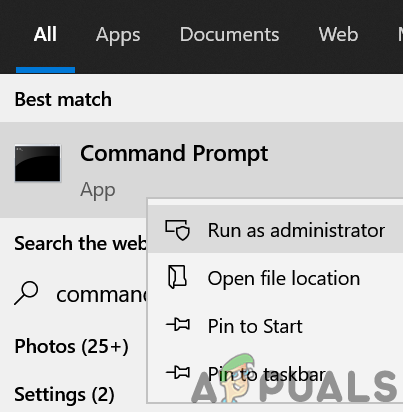
Open Command Prompt as Administrator - At present execute the following:
SET DEVMGR_SHOW_NONPRESENT_DEVICES=1

Set Device Manager to Show Non-Present Devices Through the Control Prompt - Then right-click Windows and open Device Director.
- Now, on the menu bar, click on View and select Show Hidden Devices.

Bear witness Hidden Devices in Device Manager - Then expand Network Adapters and check if a hidden network card is shown (a flake greyed out entry).
- If so, right-click on the hidden network adapter and select Uninstall.
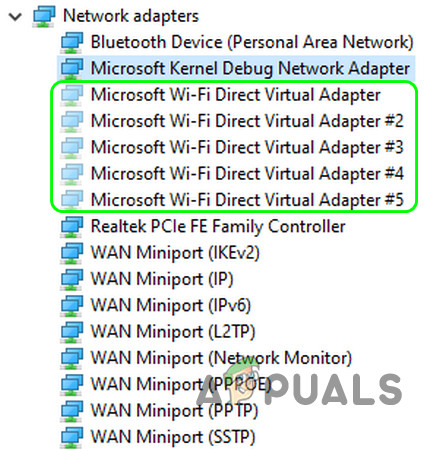
Uninstall the Subconscious Network Adapter in the Device Manager - And then checkmark the option of Delete the Driver Software for This Device (if available) and click on Uninstall.
- Now echo the aforementioned for all the hidden network drivers.
- Once the hidden network adapters are uninstalled, reboot your PC and upon reboot, bank check if the network adapter is detected in Windows.
- If not, check if installing the latest driver from the OEM website sorts out the adapter upshot.
Utilize the Command Prompt to Reset Adapter
If the effect persists even after trying the solutions above, and then you may try the administrator control prompt to solve the network adapter effect.
- Click Windows, type: Command Prompt, right-click on information technology and select Run as Administrator.
- Now execute the post-obit cmdlets in the Command Prompt:
netsh int ip reset reset.txt netsh winsock reset netsh advfirewall reset
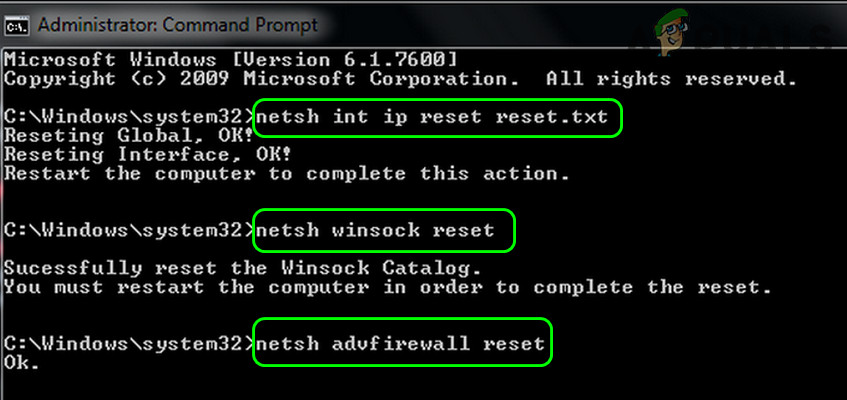
Reset IP, Winsock, and Advfirewall Through the Control Prompt - And so reboot your PC after exiting the Command Prompt and check if it is clear of the network adapter issue.
- If that did not work, check if executing the following cmdlet in the Command Prompt solves the network adapter consequence:
netcfg -5 -u dni_dne
Disable Conflicting Devices in the Device Manager
The network adapter might non be shown in the Device Manager if a conflicting device is hindering the operation of the network adapter. In this context, disabling the alien devices in the Device Manager (PCMCIA adapter is reported to crusade the issue) may solve the problem.
- Correct-click Windows and select Device Director.
- Then expand the PCMCIA adapter and correct-click on the adapter (e.g., O2Micro OZ6912/601/711E0 CardBus/SmartCardBus Controller).
- Now select Disable Device and confirm to disable the device.
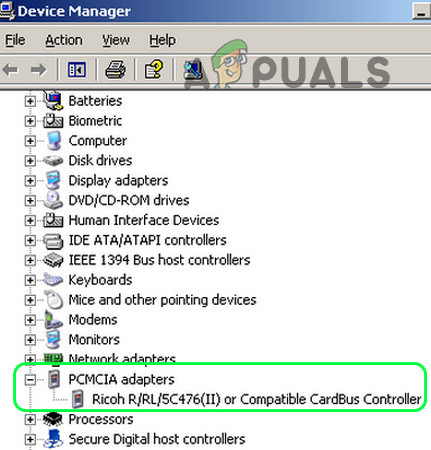
Disable PCMCIA Adapter in the Device Managing director - Then repeat the same for the VPN and VMWare adapters.
- Now restart your system and check if the network adapter outcome is resolved.
If that did not do the trick, yous may effort to disable all the non-essential devices ane past one to find the problematic one.
Uninstall the Alien Applications
Windows ten might non bear witness a network adapter in the Device Manager if an application (especially a VPN customer like Junos VPN) is hindering the networking modules of the Os. In this scenario, uninstalling the alien applications (like Cisco AnyConnect) may solve the problem.
- Right-click Windows and select Apps & Features.
- Then expand any VPN-based application (like Cisco AnyConnect) and click on Uninstall.
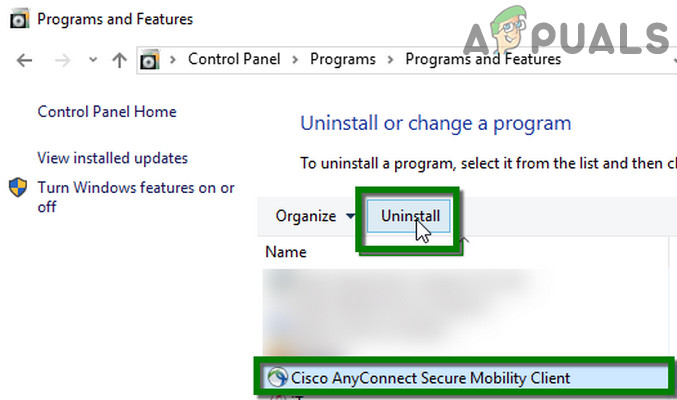
Uninstall Cisco AnyConnect - Now confirm to uninstall the VPN application and reboot your PC.
- Upon reboot, check if the network adapter is working fine.
- If not, you lot may uninstall any VMware-related applications and reboot your PC to cheque if that resolves the network adapter issue.
If the issue persists, then you may clean kicking your PC to find out the problematic application (like Visio 2016).
Source:
Edit the BIOS Settings of Your PC
Windows 10 might not show the network adapter in the Device Managing director if the BIOS of your arrangement is outdated or not properly configured. In this scenario, updating the system'southward BIOS or properly configuring the system's BIOS may solve the problem.
Warning: Advance at your own take a chance equally editing the organisation's BIOS (or updating information technology) is a proficient skill and if non done properly, you may cause undying damage to your system/information.
Disable/Enable the Network Adapter in the BIOS Settings
- Boot your system into BIOS and expand Wireless.
- Now, in the left pane, select Wireless Device Enabled, and in the right pane, uncheck WLAN.
- Then uncheck Bluetooth and use your changes (do not leave BIOS).
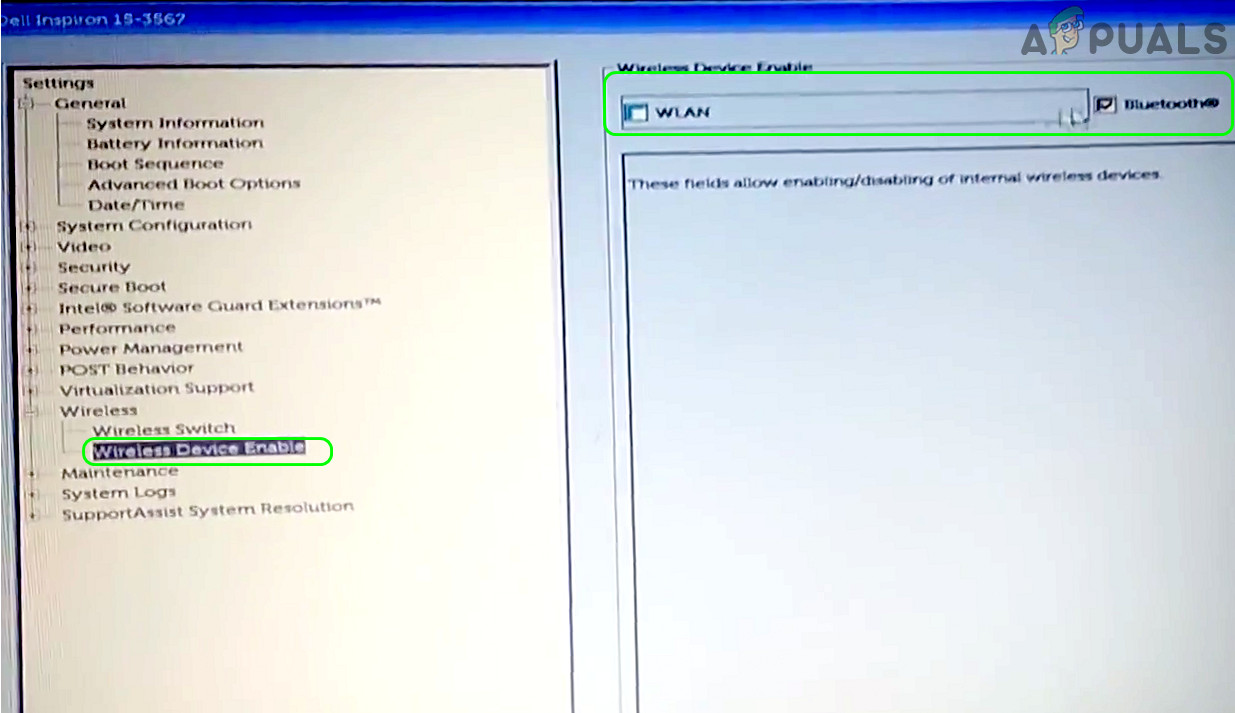
Disable WLAN and Bluetooth in the BIOS Settings - Now, in the left pane, expand the System Configuration tab and select Integrated NIC.
- Then, in the right pane, select Disabled and apply your changes.
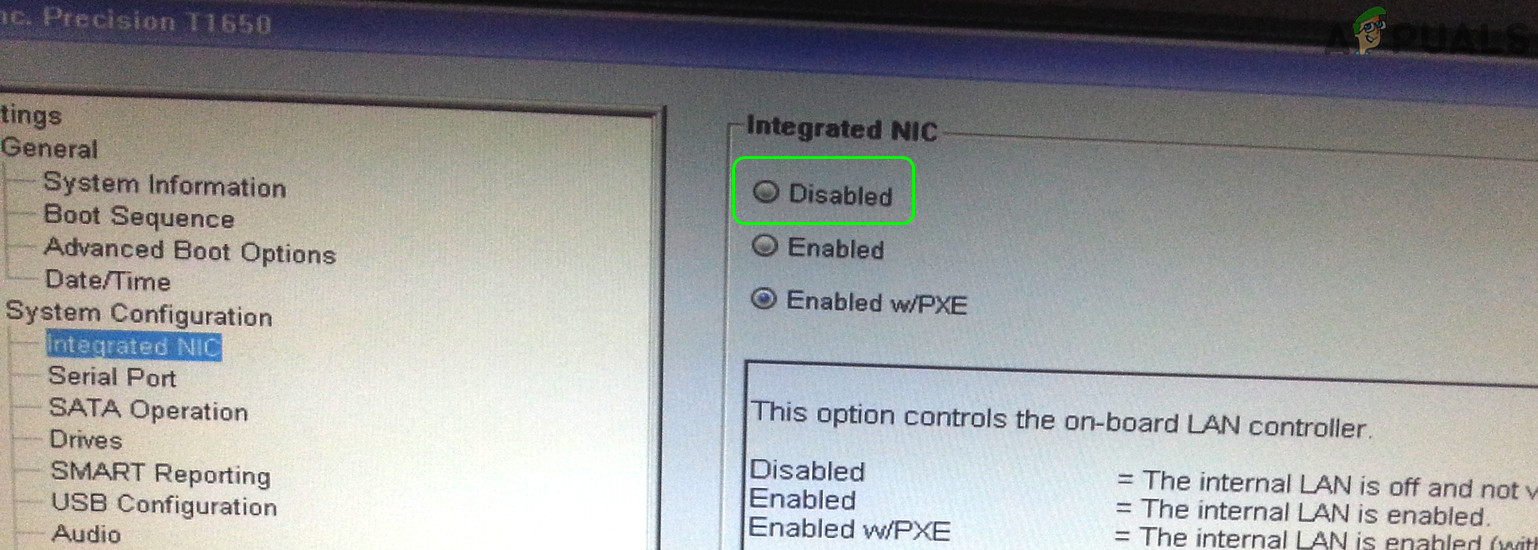
Disable Integrated NIC in BIOS - Now kicking your organization into Windows and once fully booted into Windows, power off your system.
- And so boot into BIOS and enable Wireless, Bluetooth, and onboard LAN.
- At present boot your system into Windows and check if the network adapter is working fine (you may have to install the latest driver from the OEM website).
Update the BIOS to the Latest Built
- Update the system's BIOS to the latest built (as per the OEM):
- Dell
- HP
- Lenovo
- Gateway
- MSI
- In one case BIOS is updated, bank check if the network adapter issue is resolved.
Reset BIOS to Defaults and Clear the CMOS Retentiveness
- Boot your System into BIOS and most the bottom of the right pane, click on Restore Settings (or Load Defaults).
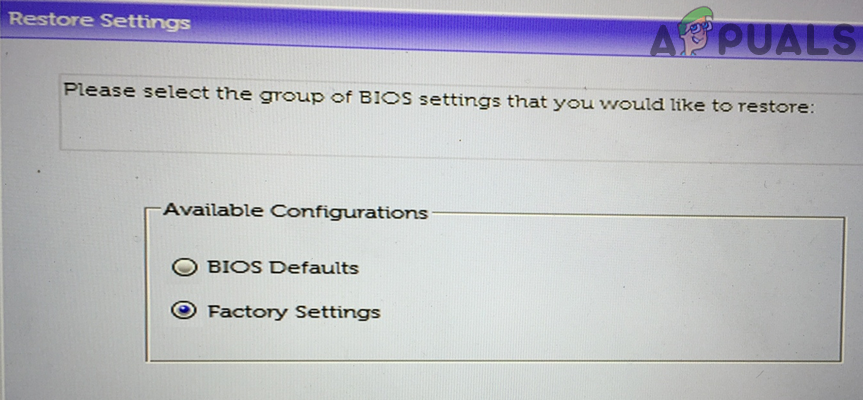
Reset BIOS to Factory Settings - Then confirm to restore the BIOS Settings and in one case washed, boot into Windows afterward exiting BIOS.
- Now hopefully, the network adapter is detected in the Device Managing director of Windows x.
If not, and then y'all may have to articulate the CMOS memory (for details instructions, check method 2 of how to fix Memory Management BSOD) past pulling out the cell on the motherboard and await for at least 5 minutes. Then place back the cell and power on the system to check if the network adapter effect is resolved (yous may have to set your hard drive as the first boot option in the BIOS).
If the issue persists, you tin prepare your network adapter in Windows x by performing an in-place upgrade (download the Windows x ISO file and launch it as ambassador) of your system to solve the network adapter effect.

Source: https://appuals.com/network-adapter-not-detected-in-windows-10/
0 Response to "What Would You Use to See What Network Adapters Are Installed in Your Windows Computer"
Post a Comment